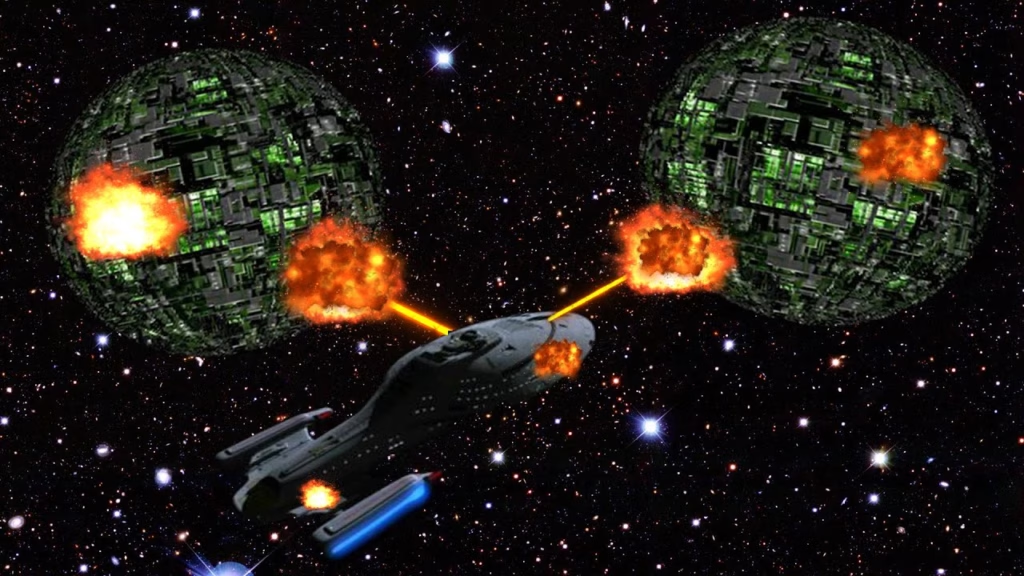
The spreadsheet had 55 rows by the time I’d finished the rewatch. Each row a ship-to-ship engagement from Voyager’s seven seasons. Some were obvious – the Borg, the Kazon, the Equinox affair – and some were the kind of one-off encounters where Voyager fought something for ten minutes and never saw it again. Forty-something distinct vessel types across the lot. Hirogen hunting parties, 8472 bioships, Vidiian warships from when the Vidiians were still a going concern. The rewatch was meant to be casual. The spreadsheet wasn’t.
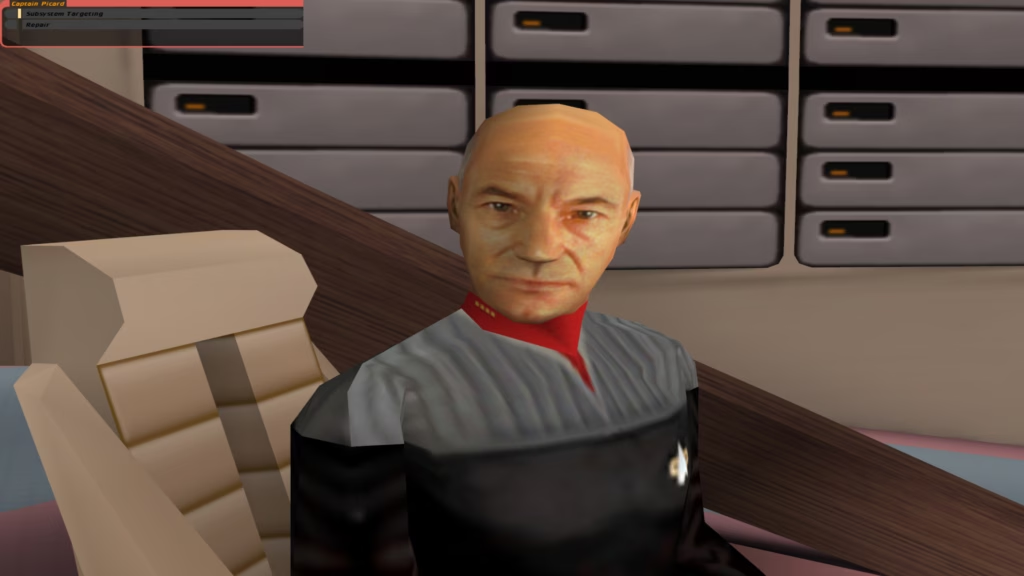
The plan was a Bridge Commander campaign. The 2002 Activision game where you sit in the captain’s chair on a recreation of an actual Federation bridge and give orders to a crew that does what you tell them, more or less. It still has an active modding scene two decades on, which is the kind of fact that explains nothing on its own. Older than some of the people now making mods for it. The continuity of that effort is the only reason a project like this is possible. Couldn’t be done from scratch. Wouldn’t try.
The campaign sits on top of one of my existing installs. There are several running side by side – Kobayashi Maru, Remastered Orion, FTech, Tech Framework, BCMM – each with a slightly different mod stack, slightly different ship pools, slightly different physics. The Voyager arc builds on one of them rather than starting cold. EAX audio runs through DSOAL because the game’s original audio implementation predates anything modern audio APIs handle natively. None of this is interesting to anyone who isn’t already in the weeds. That’s fine. It’s not for them.
What turned this from weekend modding into something approaching a small studio’s workload was the voice lines.
475 of them across five crew roles. XO, Helm, Science, Tactical, Engineering. Each role with a distinct voice, each line written to fit the bridge-command vocabulary Bridge Commander uses for everything from ‘target acquired’ to ‘warp core breach imminent in thirty seconds’ to the mission-specific dialogue that makes each of the 55 encounters feel like its own thing. I’d been using ElevenLabs for other things, so the batch API side was straightforward enough – feed it the spreadsheet, point it at the voice IDs, let it run. The compute took a few days. That was the easy bit.
The spreadsheet was the work. Writing 475 lines that hold tonal consistency across five characters, that match the cadence of bridge dialogue in the actual show, that include enough variation that the same response doesn’t fire every time you flank a Kazon raider – that’s where the weeks went. Tagging the files to match Bridge Commander’s mission scripting convention, sorting them into the right folders, double-checking that the Tactical officer doesn’t suddenly sound like the Helm officer two missions in. Boring, fiddly, the kind of work that should have felt like a chore and somehow didn’t.
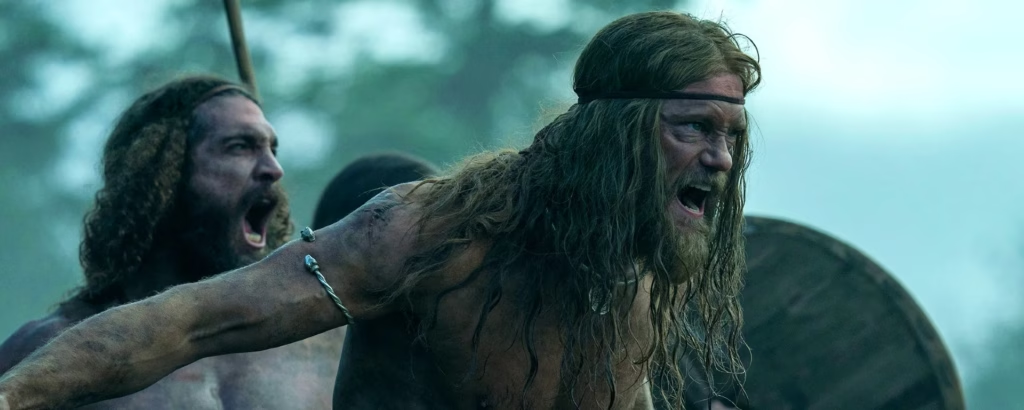
The captain in this campaign is Northman. Not Janeway. Not a self-insert with the serial numbers filed off. A specifically different captain – one who runs Voyager more aggressively than Janeway did, who’s quicker to fire and slower to lecture, whose Maquis-era instincts never fully softened when he took the chair. The crew responds to him by name across all 475 lines. The campaign is essentially an AU. Voyager with a different person in command makes some of these encounters resolve differently, and the dialogue had to carry that. It’s a small change that re-shapes the whole arc, which is part of why this stopped being a quick mod and turned into the thing it became.
What the spreadsheet showed me – and this is the bit I didn’t expect from a rewatch – is that Voyager is genuinely combat-heavy in a way DS9 wasn’t, in a way TNG mostly wasn’t. Some seasons are basically wall-to-wall ship-to-ship, with the interpersonal stuff happening in the gaps between fights. Season four does this particularly badly, or particularly well, depending on whether you’re watching for the politics or for the explosions. DS9’s Dominion War arc is structured, scheduled combat – capital ship engagements in formation, with stakes built across episodes. Voyager is just running into things and shooting at them for seven years. Different shape entirely. Mapping it row by row is different from remembering it episode by episode.
Whether this ever sees the light of day as a public release, I honestly don’t know. It might just be a campaign I play through alone and never package up. That’s allowed. Trek fan projects have been built and shelved and rebuilt and shelved again since the seventies, and the only thing that makes one of them count is that it got finished, or didn’t, and was honest about which. This one isn’t finished. The spreadsheet is complete. The voice lines exist. The missions are being slotted in, one at a time, in the evenings.
55 engagements is a season and a half of a real game. 475 voice lines is a small studio’s worth of work. None of this needed to be done. It’s getting done anyway.