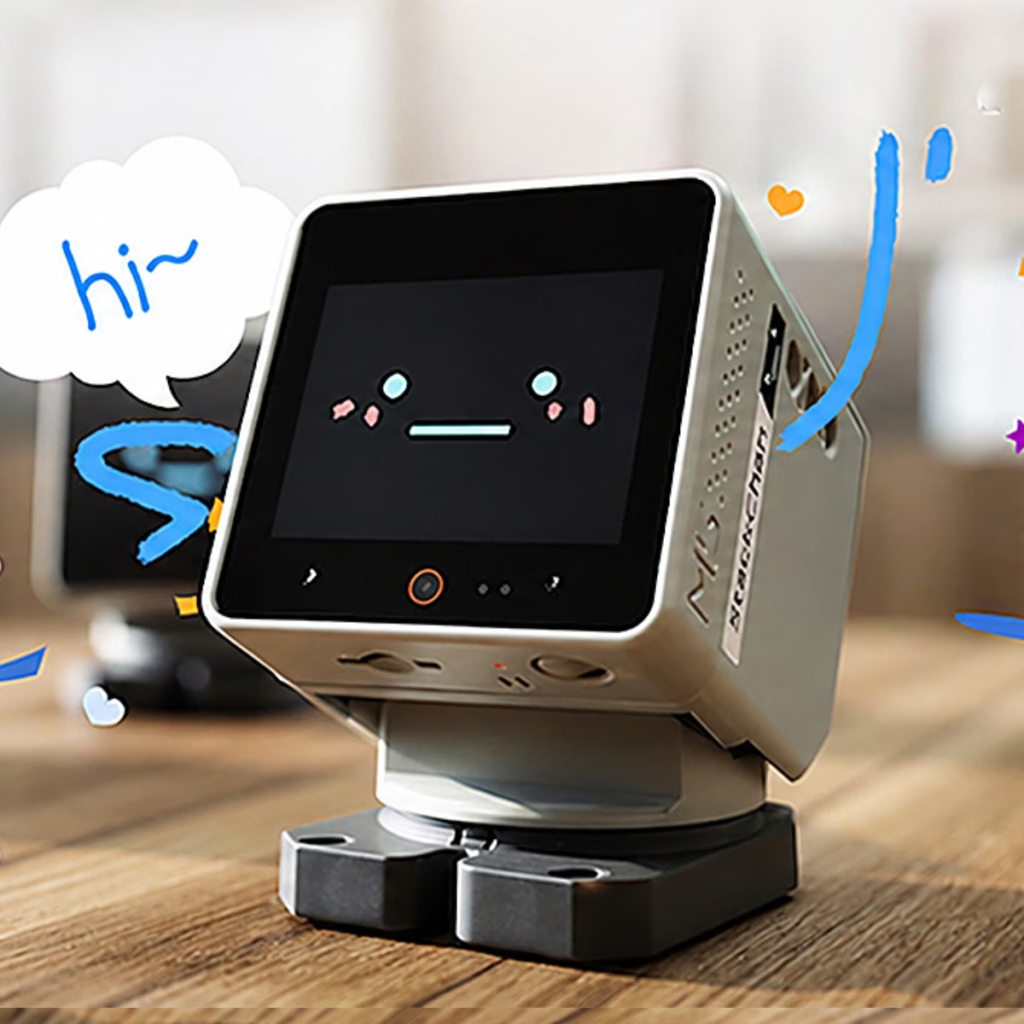
The order confirmation came through in early February and now I’m in the strange interim where a small robot exists in someone’s warehouse with my name on it and I cannot yet do anything with it.
StackChan is M5Stack’s desktop robot. ESP32-S3 inside, two servos for head movement, a 2-inch touch screen for the face, dual mics, a small camera, twelve RGB LEDs doing whatever I decide they should do. Open hardware, open firmware, a community on GitHub maintaining several forks and a thriving cottage industry of face designs. The hardware is the easy bit. The character is the work.
The plan is that it becomes the face of the Garage AI. The middleware has been running headless on DIRECTIVE for months. COMM-01 and COMM-02 already do voice satellite duty on their pyramid bases in the office and the living room. They listen, they parse, they hand off to Home Assistant. They are infrastructure. The interaction is functional – you speak, something happens, you carry on.
StackChan is the bit that changes the relationship. Same model behind it, same routing, same emotion tags going over MQTT, but a thing with a face on a desk that turns to look at you when you speak is not the same as a speaker on a pyramid even if the words coming out are identical. That distinction is the whole reason it ended up on the order list. The Garage AI as a service is solved. The Garage AI as a presence is not.
The M5Stack ecosystem is the wider reason this was always going to happen. Every previous M5Stack thing I’ve bought has been good. The ATOM EchoS3Rs became COMM-01 and COMM-02. The DualKey does wifi remote duty for the lights and doubles as a Bluetooth media controller. Two Cardputer Advs are in the parts pile. A Chain macro pad is on the build list. Once you have one of their devices the next one stops feeling like a separate purchase and starts feeling like the same project continuing. Connectors line up, dev tooling carries over, docs sit at roughly the same level of patience. Cheaper than a Raspberry Pi rig, less general, more characterful.
That is roughly the shape of where the household is heading. Smaller hardware that does specific things well, slowly displacing the general-purpose Alexa-style appliances that did many things badly. None of it is essential. All of it is more pleasant.
Buying a desktop robot to be the face of a personal AI is the kind of sentence that would have sounded properly mad in 2015. In 2026 it is just about the right side of reasonable. The line between maker hobby and mildly eccentric collecting is somewhere round here, and I am not entirely sure which side of it I am standing on.
The box hasn’t arrived. The plan is *excitedly* ready.