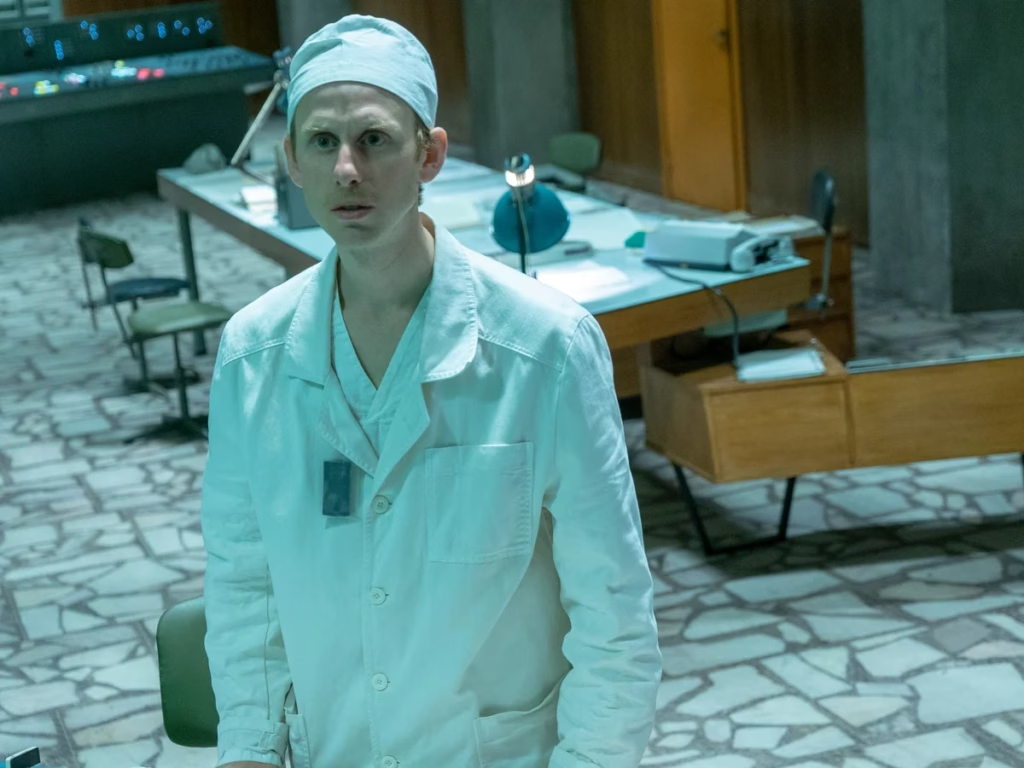
Chernobyl is on again. Third or fourth time through. It is, somehow, still the same five episodes it was in 2019, which sounds like a stupid thing to say until you remember how much TV gets rewatched and discovers new flaws each time. Chernobyl just holds. It holds because it commits.
What it commits to is not historical accuracy. Let’s get that out of the way first, because the discourse around it always seems to be stuck there. Yes, the helicopter crash happens months too early. Yes, Khomyuk is a composite character invented to serve a structural need. Yes, the divers didn’t die. Yes, the courtroom finale collapses years of investigation into a single dramatic scene that no historian recognises. Yes, the bridge of death is contested. Yes, the iodine pills, the helicopter pilot’s fate, the timeline of the evacuation, the precise behaviour of the graphite, all of it has been picked apart by people more qualified than me, on YouTube, with diagrams.
Fine. All true. None of it matters.
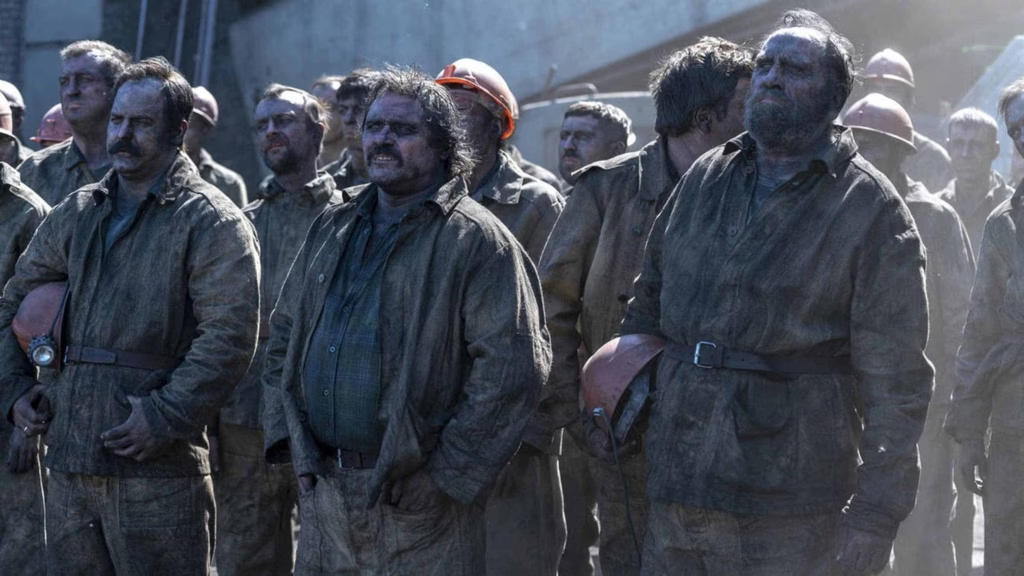
It doesn’t matter because the show is not pretending to be a documentary. It’s a tragedy in the Greek sense – a story about a system that cannot survive contact with the truth, told through the people the system tried to use up and discard. The accuracy of any given scene is in service of that, or it isn’t, and the show is willing to bend the first one to serve the second.
What I think happens with viewers – and what happened with me, the first time round – is you arrive expecting either history or drama, and the show is doing the thing where it tilts back and forth between them so adroitly that you stop being able to tell which mode you’re in. That ambiguity is itself the point. The show is about a society in which the official record and the actual events have stopped corresponding. Of course the show plays games with the official record. It would be weird if it didn’t.
The thing I notice on rewatches is how much of the work is done by texture rather than plot. The colour grading. The decision to shoot it in Lithuania in actual Soviet-era buildings rather than CGI everything. The way nobody is wearing makeup, ever. The wallpaper. The wallpaper does an enormous amount of structural work in this show. You believe the wallpaper, and once you believe the wallpaper, you believe the meeting rooms, and once you believe the meeting rooms, you believe the men in cheap suits making catastrophic decisions inside them.
This is the bit where I’d normally say something about how Hollywood has lost the ability to do this, and I’m going to resist that because it isn’t quite true. The same year Chernobyl came out you had Mindhunter doing similar work with American 70s and 80s production design. There are still people who care about this stuff. But the prestige-TV machine has, on average, slid further into a generic glossy mid-Atlantic look that isn’t anywhere in particular and can’t really commit to a tone, and Chernobyl stands out partly because it commits.
The other thing I notice on rewatches is Jared Harris. Specifically the way Jared Harris plays Legasov in episode one and the way he plays Legasov in episode five. Same actor, same character, completely different man. By the trial scene he has been hollowed out by what he knows and what he is about to do, and Harris plays it so quietly that you don’t realise the size of the performance until it’s over. There is no Oscar-bait monologue. There is just a man who has finally decided to tell the truth, knowing it will end him, and the doing of it is small and tired and exact.
If you want a single scene that justifies the whole project, it’s the bit in the meeting where the local party committee chairman, an old man, gives a speech about the trust of the state and asks everyone to do their duty, and the room applauds him. He is wrong. He is going to kill people with what he is asking. But the way it’s written and the way it’s played makes you understand exactly why he believes what he believes, and exactly why the room applauds. The show refuses to flatten him into a villain. He’s a true believer in a system that is about to eat the people in front of him. That’s not historically accurate in any literal sense. It is, however, true in the way drama can be true, which is the only kind of true the form is good at.
So I’ll keep rewatching it and the internet will keep churning out videos about the helicopter timing. Both can be valid activities. They’re just different exercises. One of them is about getting the events right. The other is about getting the feeling right. The show is doing the second thing on purpose, and doing it about as well as the form allows.
The bit at the end of episode five, with the real photos and the names and the dates, gets me every time. Whatever liberties the show took, it takes them in service of the people in those photos. That earns it most of what it asks for.