
The episode that gives the game away is The Measure of a Man – Star Trek: The Next Generation: Season 2, Episode 9, and it gives it away in 1989, in a courtroom, with two officers arguing over whether one of them is furniture.
That’s the whole franchise in a single hearing. A Starfleet captain defending a Starfleet officer from a Starfleet legal proceeding, all of it conducted under Starfleet’s own regulations, the entire question being whether the institution gets to decide what one of its members is. Picard wins.
He wins by being the better lawyer, in a courtroom set up by the same bureaucracy that was about to disassemble his second officer for parts. Trek puts its thesis on screen and most critical writing about the franchise breezes past it, because the episode reads as a Data episode rather than what it actually is, which is a Federation episode about the Federation asking who counts.
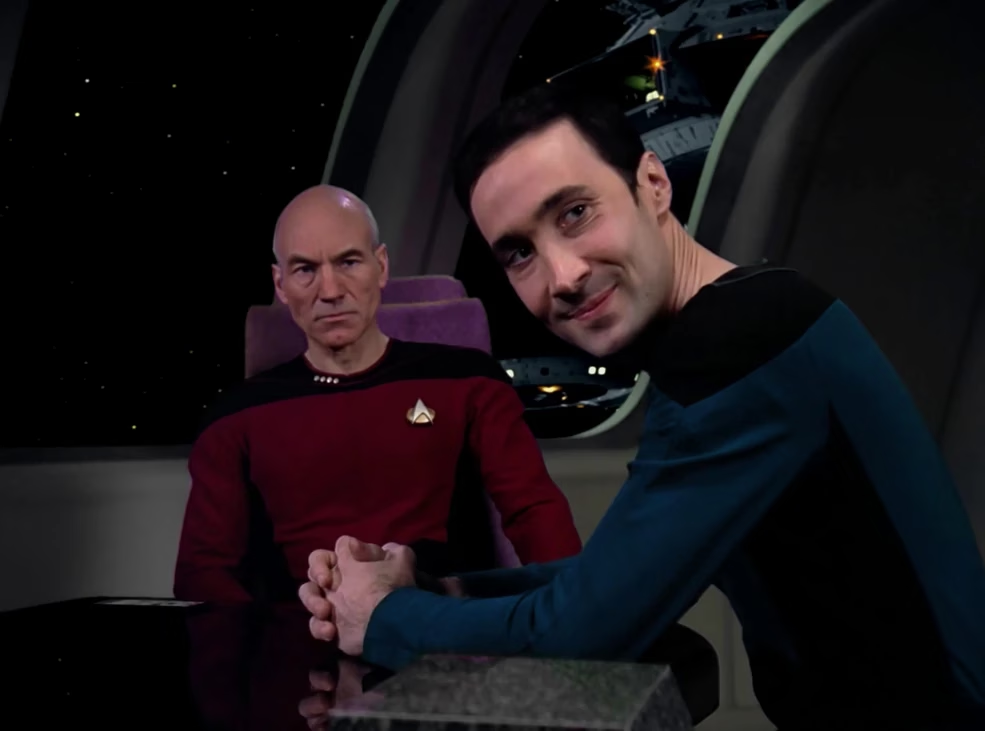
The shows are nominally about spaceships and aliens. Read the pattern under the surface and they’re about something narrower and more consistent. A character belongs to an institution. The institution puts them in a position where the regulation and the right answer point different ways. What they do next is who they are. Trek runs this engine for sixty years and the engine is the show.
The pattern moves through the eras and it doesn’t really change shape, only setting. TNG runs it through Picard, who is by temperament the most institutional captain the franchise has ever had, and that’s precisely why his identity crises are bureaucratic.
The Drumhead is Starfleet’s own paranoia eating itself in front of him, and Picard’s victory isn’t winning the argument – it’s recognising what the argument is before everyone else does.
Tapestry is Q forcing him to confront the fact that the unbroken record he’s built his identity on came from one specific bureaucratic moment he could have ducked and didn’t.
The Measure of a Man and The Drumhead are bookends – Picard wins one through better argument and loses the other through institutional momentum, and both episodes are formally structured as proceedings.
The format is the point. The hearing, the record, the procedure. Trek keeps returning to the room with the table and the gavel because that’s the room where the question gets asked clean.
DS9 takes the engine and makes it the whole premise. Sisko commands a station the Federation half-owns and half-doesn’t, in orbit of a planet that joined and unjoined the Federation about four times in seven seasons. Kira’s arc from terrorist to officer happens entirely inside a joint command structure that nobody on either side can fully describe.
The Maquis exist because the Federation drew a border, and the Maquis are people who used to be Federation.
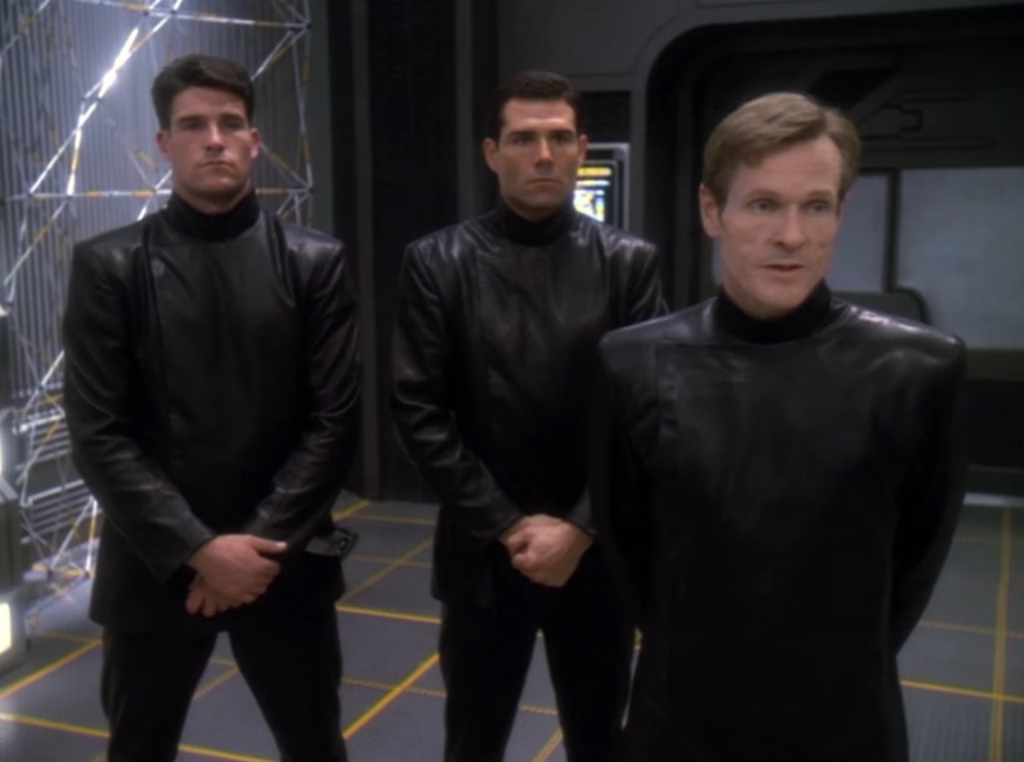
Section 31 is the bit where DS9 stops being subtle about the thesis – the question of whether the Federation’s published ethics are its real ones, made flesh in a recurring agency the rest of the bureaucracy can’t admit exists. Whether you think Section 31 should be canon is a separate argument. That the franchise was always going to have to ask the question isn’t.
Voyager gets dismissed sometimes for repetition, and the dismissal misses what’s interesting about its bureaucratic setup, which is that there isn’t one. The show is the Federation stripped of its parent institution. Janeway has to be Starfleet in miniature for seven years because there is no Starfleet to phone. Every command decision is an identity decision because there’s no rulebook that doesn’t have to be re-derived from first principles by the person currently making the call.
People argue about whether Janeway is consistent. She isn’t, and she shouldn’t be, because the show’s actual question is what bureaucracy you build when you’re the only person who can write one. TNG has the Federation in the room. Voyager has the Federation in Janeway’s head, which is a much harder place to keep it.
TOS runs the engine in the opposite direction. Kirk’s identity is built on knowing exactly when to ignore Starfleet Command, and the show tells us he’s right to. The Doomsday Machine puts him under a captain who’s lost his crew and taken the Enterprise under regulations Kirk technically has to obey, and the episode resolves by Kirk breaking the regulation.
The institutional question is the dramatic question. Enterprise runs the same engine before the institution has fully assembled – every diplomatic incident is an identity question because Archer has no Starfleet to hide behind yet, and the show’s slow accretion of treaties and protocols is the bureaucracy being built in front of you.
Which brings me, reluctantly, to NuTrek, because the pattern is what makes my reluctance specific rather than reactionary.
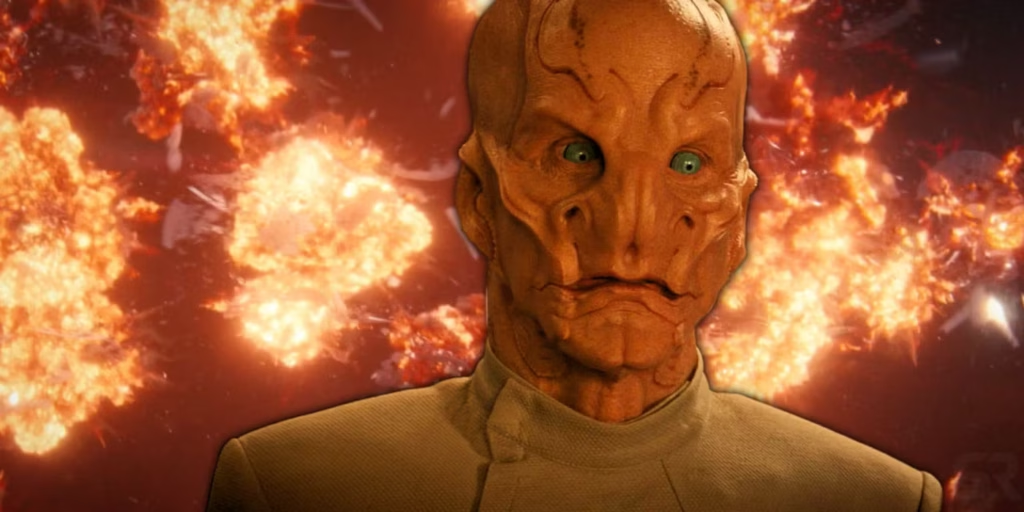
The institutional questions are still there in Discovery and Picard. They’ve just been demoted. The shows reach for emotional climax where the older ones reached for procedural argument, and the bureaucracy stops being a venue for identity and starts being scenery for trauma. There’s also a tonal shift I find harder to forgive, which is that NuTrek has decided the Federation’s default state is dystopian. Picard opens with the Federation having banned synthetic life and abandoned the Romulan rescue, and the show treats this as the normal state of things rather than the crisis the old shows would have built a courtroom episode around. Section 31 used to be the rot inside the apple. In Discovery it’s basically a recurring cast member.
DS9 went to dark places too, obviously. Homefront and Paradise Lost have Starfleet attempting a soft coup of Earth. In the Pale Moonlight has Sisko fabricating a casus belli and assassinating a politician through a third party. Inter Arma Enim Silent Leges is Bashir watching Section 31 win. These episodes are brutal and the show doesn’t flinch from them. But they sit inside a story that’s still about Federation officers trying to be Federation officers in a war that keeps making it harder, and each episode resolves with the character having to live with what they did rather than the institution shrugging and moving on. The darkness is the weather inside one episode. It isn’t the climate of the show. NuTrek uses the season-arc format to commit to bleakness in a way a forty-three minute episode never could, and the modern shows have used that runway to lean in rather than to do more careful work.
Credit where it’s due. Picard’s third season finally remembered what the franchise was, and it remembered by putting the old crew back in the room and letting them be officers again. The bureaucracy is the antagonist, the institution has been hollowed out from inside, and the resolution is the old hands recognising the rot for what it is and dealing with it as Starfleet officers rather than as traumatised individuals. It works because it’s the engine running properly for the first time in a while. Lower Decks runs the engine constantly and pretends it isn’t – every episode is four ensigns navigating regulations they barely understand under a captain who’s working out her own institutional position week by week, and the show plays it as comedy without ever losing the structural seriousness. Strange New Worlds is doing the same trick at a slightly more serious register, and it remembers that the question of who Pike is and the question of what Starfleet is supposed to be are the same question. The engine still runs. It runs better in some hands than others.
The title says secretly and the secretly is doing real work, because the shows aren’t ostensibly about any of this. They’re about phasers and time loops and the holodeck malfunctioning again. The structural pattern under the surface is consistent across sixty years of television written by hundreds of people with no shared bible. It’s not a coincidence. It’s what the franchise has always been about. The aliens are the metaphor. The Federation is the subject.
Data, in 1989, sitting in a Starfleet courtroom while Starfleet decides whether he’s a person. The franchise hasn’t said anything clearer since.