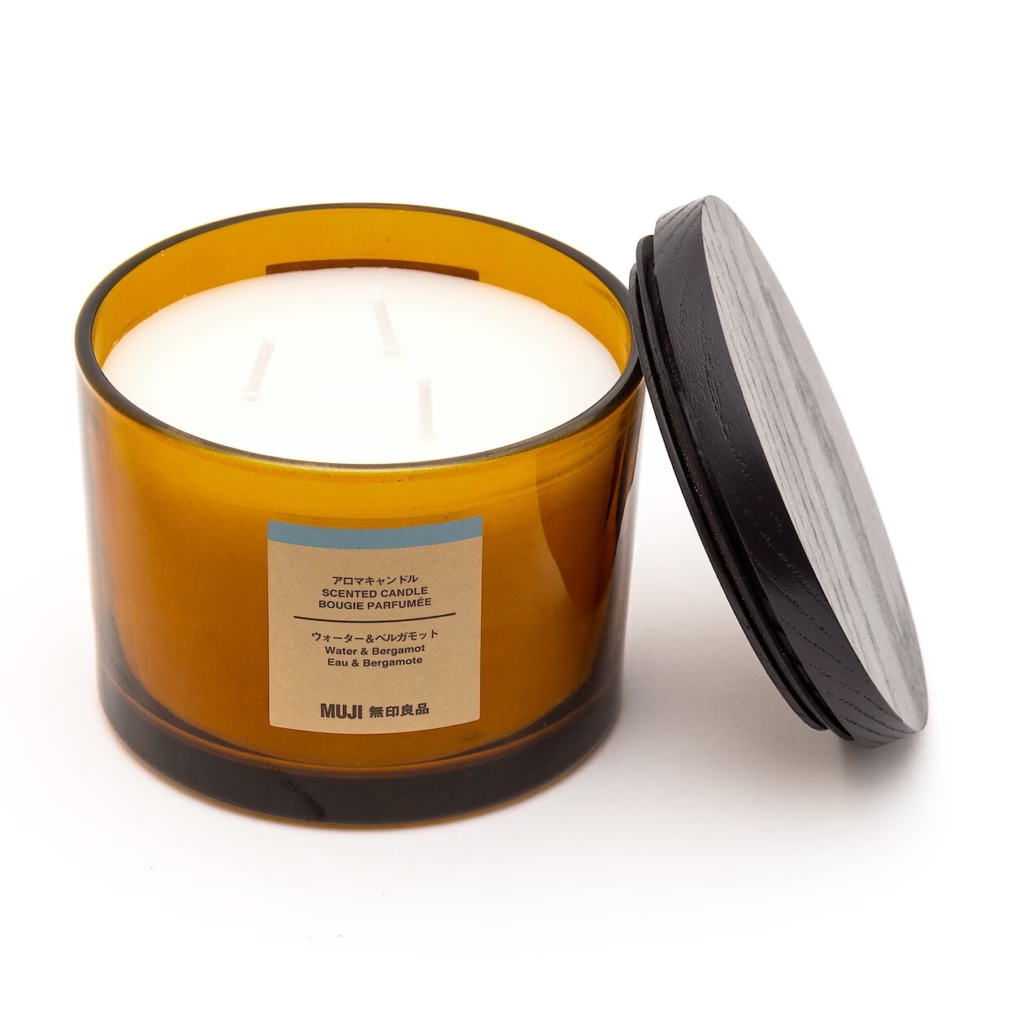
There’s a Muji candle called Water and Bergamot that’s been quietly sitting in their range for years. The marketing copy describes it in the usual terms – fresh, citrus, clean. The actual smell is more specific than that, and more interesting. A faint chlorine-water note underneath, bergamot lifting it slightly off the ground, and a clean-cotton thing holding the middle together that probably isn’t bergamot at all. It costs twenty quid and burns down in a couple of weeks if you actually use it.
I burnt a lot of them before I started thinking about what the scent actually was.
The thing it reminds me of isn’t a season or a place I’ve been. It’s the implied smell of a properly-maintained space station. Not the cinematic version – films tend to go either sterile-laboratory or grimy-engineering, and both are wrong. The Muji version is what a Federation starship corridor probably smells like in the bits the camera never lingers on. Recycled air run through good filters. Mild humidity control. The faint chemical hint of whatever industrial cleaner the maintenance crew uses on the deck plating between shifts. Not unpleasant. Not exciting. Designed not to be noticed.
That’s what makes it work in my office. The scent doesn’t smell like anything specific. It implies an environment. And the environment it implies is somewhere I want to be when I’m working – controlled, maintained, slightly clinical, not corporate, not domestic, somewhere in between the two. The reference point is fictional. The effect on the room is real enough that I started getting twitchy when the candle ran out.
Twenty quid every couple of weeks for a smell I’d come to rely on felt daft. So I tried to make my own.
The use case wasn’t candle work, which is an evening-ritual sort of thing – light it, watch it, blow it out. I wanted constant low-level scent in a room I spend most of the day in. That meant an oil diffuser running aromatherapy oils, which is a different discipline. Diffusers are forgiving in some ways and unforgiving in others. You can’t hide a bad blend behind candle flicker and wax melt theatre. It just sits in the air and is whatever it is.
Bergamot was the obvious starting point. A small amount of neroli for the floral lift. A vanishingly small amount of vetiver to ground the citrus so it didn’t read as air freshener. So far so aromatherapy. Then I needed the cotton note, and essential oils can’t really do clean cotton – clean cotton isn’t a plant. That meant a synthetic fragrance oil, a ‘fresh linen’ type, the sort of thing perfumers use without apology and aromatherapists treat with suspicion. I’m not in the second camp. Some smells in the modern world genuinely require synthetics because their reference points aren’t things you can distil out of anything.
The hard one was the chlorine-water note. The thing that gives the Muji candle its actual character. There’s no essential oil for that either. There isn’t one for water at all, when you think about it – water doesn’t smell of anything, and the smell we associate with it is the smell of whatever’s in it. Chlorine, minerals, ozone, wet stone. What I needed was an ozone-type fragrance oil, which is what perfumers reach for when they want ‘fresh air after rain’. Too much and it tipped into swimming pool. Just enough and it sat underneath everything else giving the blend the slight clinical edge that made the original work.
https://www.candlescience.com/fragrance/ozonic-element-fragrance-oil/?variant=1-oz-bottle
That was the unlock. The bergamot you’d guess from the label. The cotton you’d guess from sniffing it. The ozone note is the actual character of the scent, and it required something a perfumer would know about and an aromatherapist wouldn’t.
The result isn’t identical. Nothing reverse-engineered from a finished product is. But it’s recognisably in the same family, doing the same job in the room, and it costs almost nothing once the bottles are on the shelf. The diffuser runs constantly. The office now has a baseline scent that quietly suggests the room is a slightly more interesting space than it actually is, which is the trick I was after.
I’ve thought about this more than I should have. Most people don’t think about ambient scent at all – if they do, they buy a candle and call it done, which is fair, because the candle is the answer to the question they were asking. Making a custom blend isn’t a flex. It’s just the next small step after noticing that a particular smell was doing real work in the room and wanting more of it without going broke.
The smell hasn’t changed what I do in the office. It hasn’t made me work better or think faster. It’s done the smaller, more honest thing of putting me, for a few hours a day, in a room that smells like a place I’d rather be.